There are objects that you
don't buy, that you collect. Objects that you don't choose lightly, because
they carry with them more than a function, more than aesthetics. They carry a
story. This is true of every wool rug we weave at Nunamae.
These rugs don't come from a
factory or a catalogue. They come from the hands of Portuguese craftsmen, the
very people who learned the craft in the silence of old houses, sometimes even
from their grandparents. Today, only a few of them still have this knowledge. A
few fingers that know how to stretch the wool, listen to it, guide it without
forcing it. But what about tomorrow? No one can answer that. Because these
craftsmen are leaving, slowly, one by one, without leaving behind any successors.
And each woollen rug becomes a living archive, a woven memory.
In each fibre, there is that
long, rare time. Time that is not measured in productivity, but in presence.
This is not a carpet to walk on in a hurry. It's a carpet to stop on. To feel
the material beneath your feet, and perhaps to remember that the most beautiful
things are those that can no longer be mass-produced.
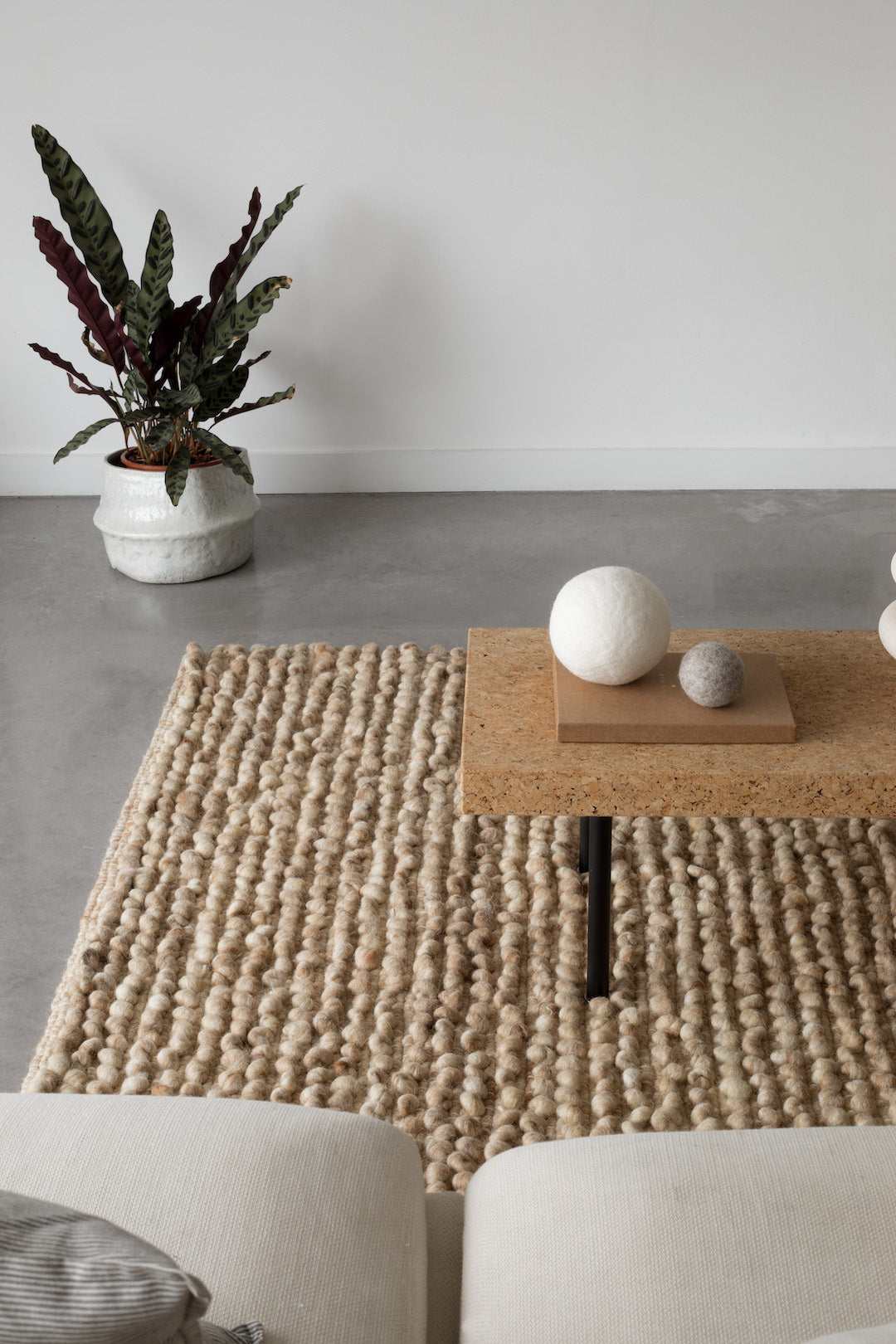
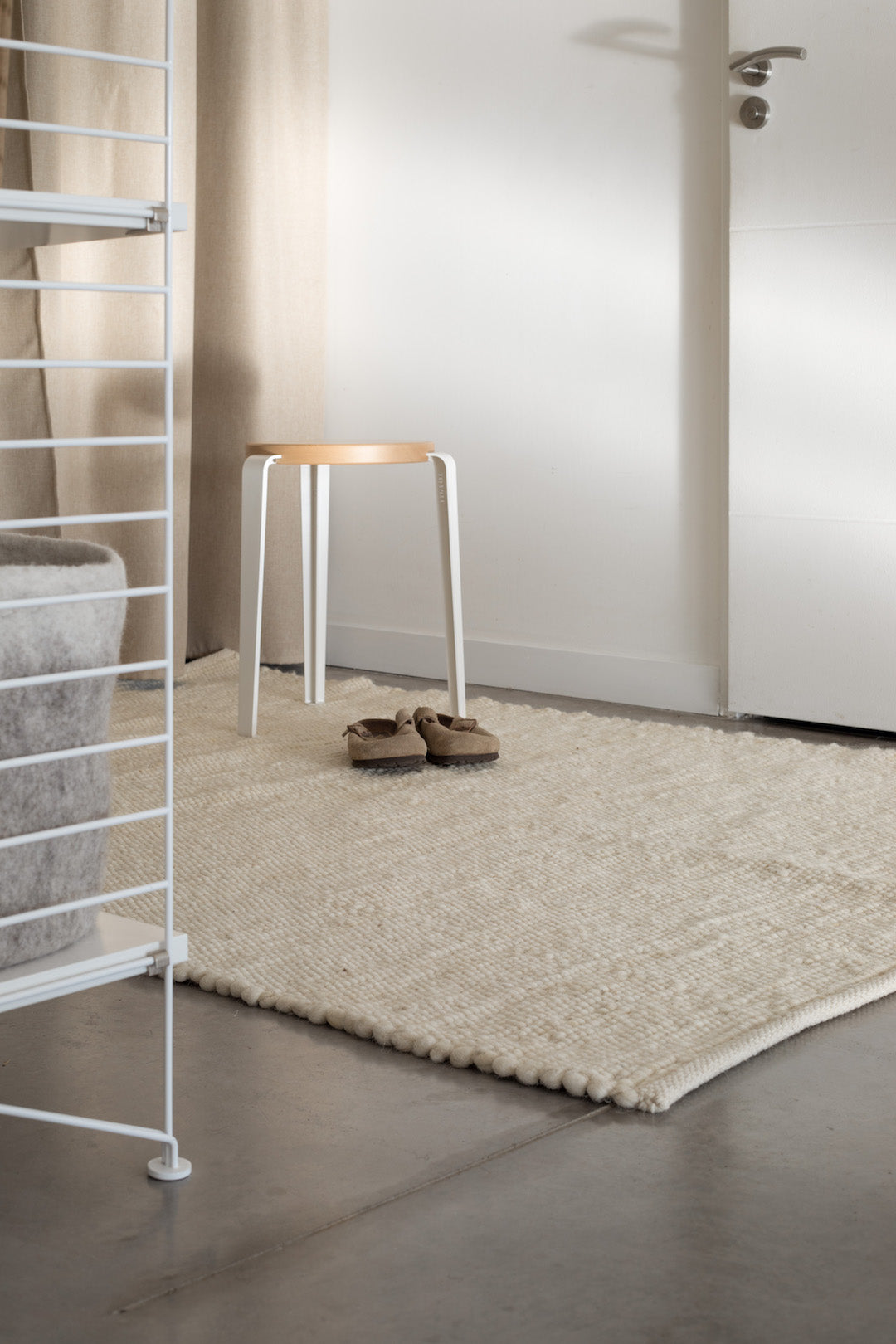
At Nunamae, wool is worked in a
raw, authentic way. It is left almost as it is, with its nuances,
irregularities and volumes. We're not looking for machine perfection. We look
for the soul of the material, its natural breathing. The result is carpets that
are soft, thick, warm, but above all deep. Because they bear the mark of a
human eye, of a slow rhythm, of total attention.
And then there's the touching
truth: these wool rugs are unique. Not just because they don't repeat
themselves. But because they will never be repeated. The craft leaves with the
craftsman. If knowledge is not passed on, it fades away. And then, what will
remain of this thread stretching between generations? Perhaps only these rugs,
in your home, as a precious trace of what once was.
Having a Nunamae wool rug in
your home is like keeping a page from a book you'll never reprint. It's
surrounding yourself with a rare, silent, strong object. It's honouring those
who still know how to make things by hand, slowly, with heart. It also means
accepting that beauty is not eternal - and that's precisely what makes it so
precious.
1. What makes a Nunamae wool
rug different from mass‑produced
carpets?
Each wool rug is handwoven by a
single Portuguese artisan, carrying centuries‑old knowledge. They’re not
manufactured in an anonymous factory—they’re crafted slowly, with intention. Their irregularities and natural
variations are signs of authenticity, not flaws.
2. Why are these wool rugs
considered “living archives”?
Every rug embodies the skill
and tradition of its maker—often passed down through family. Since this
knowledge is rare and slowly disappearing, each rug becomes a tangible memory,
a physical testament to a craft that may soon vanish.
3. Can wool rugs still be woven
in the same way tomorrow?
Sadly, not in the same way.
These artisans are the last bearers of their craft, and as they retire, so does
the technique leave with them. Each rug is therefore irreplaceable—once made,
its exact counterpart can never be reproduced.
4. Why embrace irregularities
in wool rugs?
The natural variations—slight
unevenness of weave or texture—are a celebration of craftsmanship and nature.
Nunamae values soul over symmetry, letting the wool breathe and feel alive, not
perfectly machine‑calibrated.
5. Are wool rugs good for
everyday living?
Yes—though they’re luxurious
and evocative, they’re also durable and functional. Made from high-quality
wool, these rugs offer insulation and comfort. Still, they deserve care and
respect, much like any artisanal piece.
6. What does it mean to own one
of these wool rugs?
Welcoming a Nunamae wool rug is
embracing a fragile piece of heritage, an aesthetic and ethical choice that
honors human craftsmanship—even if that legacy is transient. It’s about
choosing meaning over mass, depth over disposable.