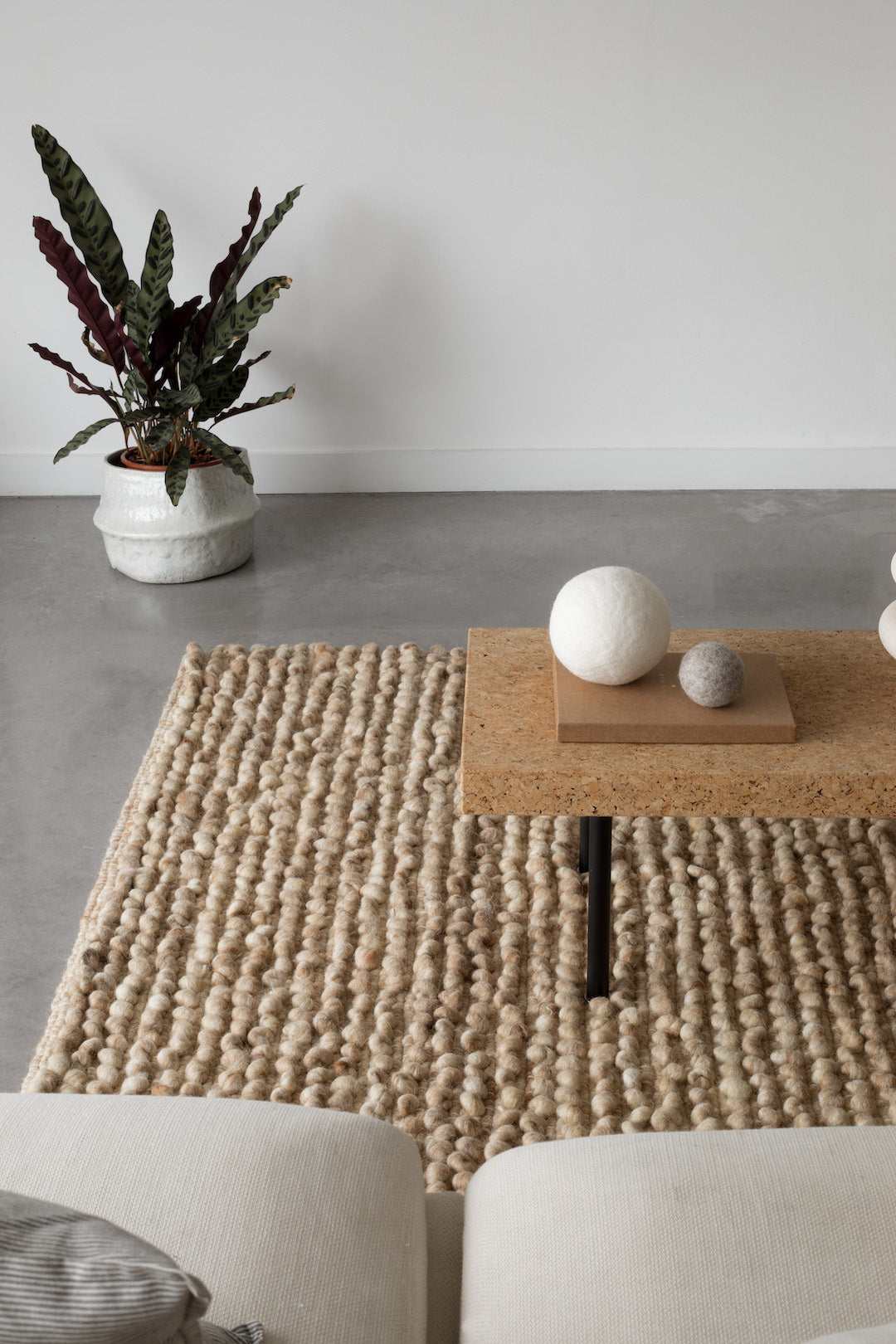
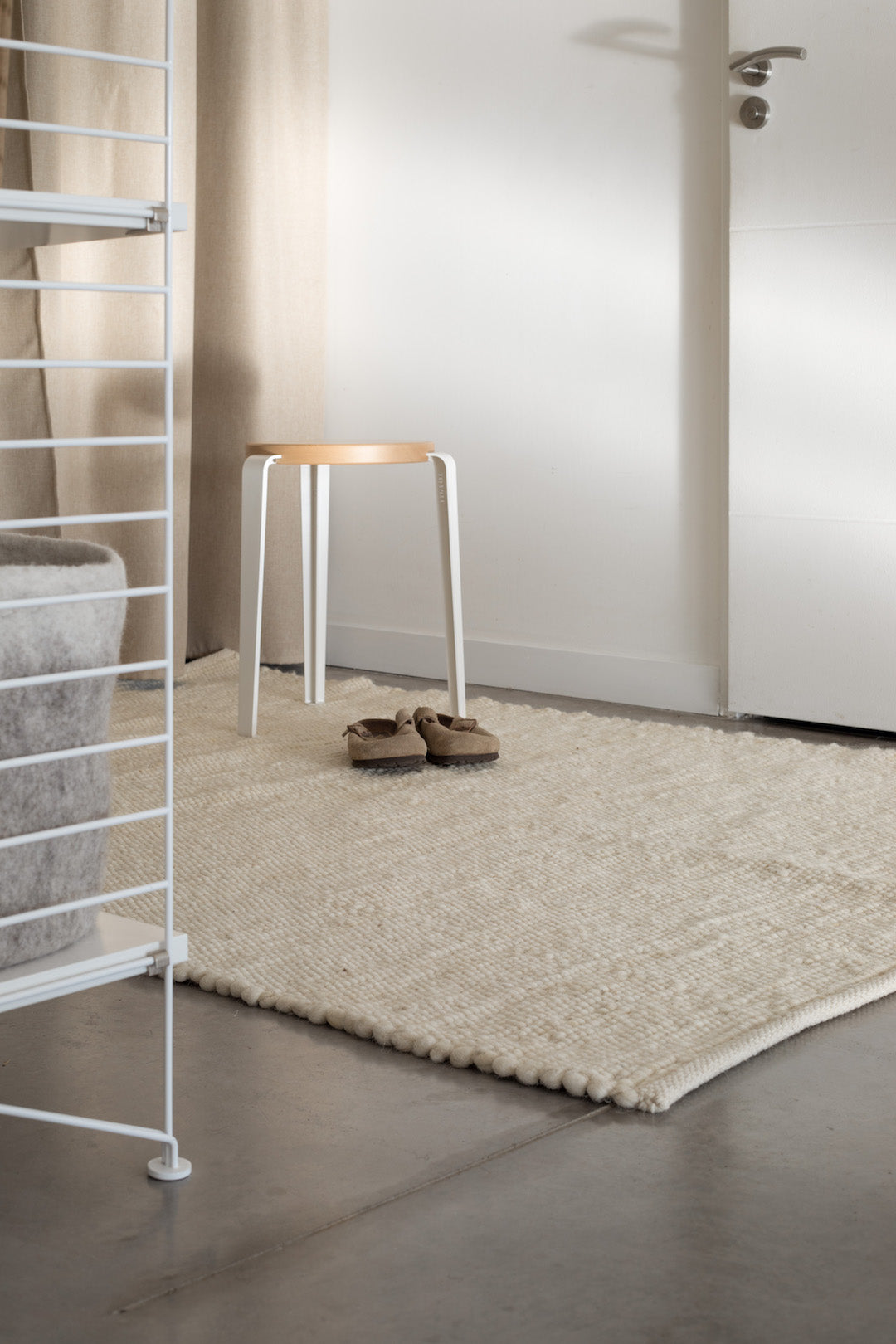
Rolling out a slow décor rug is like laying down the manifesto of slow
living beneath your feet. Rooted in the 1980s Slow Food movement, slow living
argues that life gets richer when we value depth over speed, choose mindfully
and seek quality instead of quantity. In interiors, slow décor turns that
philosophy into practice: it favours objects that last decades, celebrate
craftsmanship and use natural materials, rather than trend-driven pieces that
become obsolete overnight.
Nunamae embodies this mindset from warp to weft. Each rug is hand-loomed
in northern Portugal in small batches, using cotton off-cuts salvaged from
local mills. Waste becomes new yarn, while family workshops keep their heritage
alive and production footprints remain minimal
No two rugs are identical; a subtle slub here, a one-of-a-kind stripe
there, and softly mottled tones that speak of their recycled origin.
These quiet, earth-rooted colours—ecru, sand, pebble grey—create a
calming backdrop that lets furniture breathe. The flat, tight weave slides
easily under doors yet feels surprisingly cushioned. Made from 100 % cotton and
free from harsh chemical finishes, the rug is naturally hypoallergenic, making
it kind to sensitive skin and nursery floors alike
Day-to-day care is equally gentle: a weekly low-suction vacuum, an
occasional 30 °C wash for smaller sizes and a half-turn every six months keep
the fibres fresh. One rug designed to last a decade or more means fewer
replacements, fewer landfill trips and a home budget spent on memories rather
than maintenance
Yet the greatest shift is intangible: when a room slows down, so do its
inhabitants. A rug that muffles footsteps, welcomes bare toes and beckons you
to sit on the floor turns a space into a retreat. In a minimalist living room
it acts as a neutral canvas that discourages impulse makeovers; in a cosy
reading nook it warms the palette beside a boucle armchair and wool throw.
Anchored at the heart of the home, it whispers that a peaceful life is woven
stitch by stitch, miles away from the frenzy of fast consumption.
Choosing a Nunamae slow décor rug is, therefore, a way to weave time
itself: honour local artisans, re-use existing materials and commit your
decoration to longevity. A simple gesture—yet a powerful one—that invites you
to live, and dwell, at a more deliberate paced.
1. What is a slow decor rug?
A slow decor rug is the floor version of “slow decorating”: it’s chosen
for long-term use, crafted in small batches, and made from natural or recycled
materials rather than trend-driven synthetics. Interior experts define slow
decorating as “intentionally curating pieces you’ll cherish for years instead
of rushing to finish a room”
2. How is a slow decor rug different from a regular area rug?
Mass-market rugs aim for quick style turnover; a slow decor rug favours
durability, artisan workmanship and timeless neutrals that won’t date next
season. Because you keep it longer, you buy—and throw away—far fewer.
3. What fibres are best for a slow decor rug?
Look for cotton (especially recycled cotton), wool or jute. These fibres
are renewable, breathable and easy to repair. Nunamae uses 100 % recycled
Portuguese cotton, turning mill off-cuts into new yarns and eliminating the
need to grow thirsty virgin cotton crops
4. Is a slow decor rug really more eco-friendly?
Yes. Conventional cotton can swallow 10 000–20 000 litres of water per
kg of fibre; re-spinning existing cotton bypasses that entire water footprint
and saves the energy used to bleach and scour fresh fibre